Research
NOW OPEN – Request for 2026-2027 Research Grant Proposals
The Real Christmas Tree Board (RCTB) is now requesting grant proposals for Christmas tree research, for 2026-2027 fiscal year funding. The purpose of the Real Christmas Tree Board Competitive Research Grant Program is to establish and conduct research with respect to the image, desirability, use, marketability, quality, product development or production of Christmas trees; to the end that the marketing and use of Christmas trees may be encouraged, expanded, improved, or made more acceptable and to advance the image, desirability, or quality of Christmas trees.
Research means any type of test, systematic study, investigation, analysis and/or evaluation designed to advance the image, desirability, use, marketability, quality, product development, or production of Christmas trees, including but not limited to research related to cost of production, market development, testing the effectiveness of market development and promotional efforts, new species of Christmas trees and environmental issues relating to the Christmas tree industry.
The RCTB annual research budget is typically around $150,000. Grant requests typically range from $10,000 to $50,000, the amount of funds available
for a particular proposal will depend on the number and merit of successful
proposals. Proposals may be submitted via email to [email protected] on or before July 3, 2026. Proposals must be submitted using the RCTB Grant Application, found on the research page of our website, www.realchristmastreeboard.org
Keep in mind; emergency project funding may be available at any time if an unexpected need arises in your area.
Priorities set for this grant cycle funding include but are not exclusive to:
- Genetic Improvement – All species, all growing regions
- Environmental and Socio-Economic Benefit of Real Trees – Health effects, green space, sustainability
- Insect/Pest Management – insects impacting Christmas tree survivability and quality, wildlife damage, herbicide resistant weeds,
- Improved technology – labor reduction, safety, cost benefit, quality of end- product (baling materials, baler pulling devices, shaking, needle loss)
- Disease Management/Resistance
Please email Cyndi Knudson, RCTB Director of Research [email protected] for additional information.
2026_27 CTPB Research Grant Application
Additional Information: 2026_2027 Request for Proposals Announcement
Webinars
The Real Christmas Tree Board and Michigan State University Extension have partnered to host a quarterly webinar series since the Fall of 2023. The webinars focus on research topics funded by the Real Christmas Tree Board. The webinars are recorded and available for viewing.
See our webinars here.
Research Topic Survey for Christmas Tree Growers – Now Available!
The Real Christmas Tree Board is responsible for utilizing checkoff funds to promote real Christmas trees, and to support scientific, unbiased research improving Christmas tree production. We invite you to complete our short voluntary survey developed to gather input from Christmas tree producers about insect, disease, and other issues that impact your ability to grow high-quality Christmas trees. The information collected by this survey will be used to direct the focus of research grant proposal requests and approvals. Please take the time to complete this survey.
Printed Survey Link: 2026-Research-Topic-Survey
email to [email protected]
or by mail to:
Cyndi Knudson
Real Christmas Tree Board, Director of Research
139 River Bluff Road
White Stone, VA 22578
Christmas Tree Research Projects Funded by the CTPB – FY 2025-2026
Effectiveness of fungicides in reducing Phytophthora root rot losses in Christmas tree Plantations – Washington State University; Dr. Marianne Elliot and Dr. Gary Chastagner
Managing Phytophthora root rot (PRR) in noble and Fraser fir plantations is a significant challenge for U.S. Christmas tree growers. In the Pacific Northwest, PRR frequency and mortality of mature trees have increased due to changing precipitation patterns and shifts in Phytophthora species. Disease development is now observed beyond low-lying, waterlogged areas. Cultural methods such as site selection, improving soil drainage, and planting resistant species help manage PRR, but chemical fungicides offer another potential solution. However, there is limited research on fungicides’ efficacy and residual activity in conifers.
Since 2003, the IR-4 Program has tested 74 products against 11 Phytophthora species on various horticultural crops, identifying several highly effective fungicides. Washington State University (WSU) aims to evaluate these top-performing fungicides for their effectiveness in protecting noble and Fraser fir seedlings from PRR and reducing disease severity in infected plants. WSU will conduct field trials using mini rice paddy plots at WSU Puyallup infested with isolates of four Phytophthora species, including P. cinnamomi recovered from PNW Christmas trees to optimize disease development.
These trials will assess fungicides with different modes of action. The objectives include evaluating root dips versus soil drenches and foliar applications, comparing spring and fall applications, and testing post-infection treatments. Residual activity will be measured to determine how long treatments remain effective. This project was started in 2024 and will continue in 2025-2026. Results will be shared with growers through publications and webinars, providing critical data on the efficacy and optimal timing of fungicide treatments for managing PRR in Christmas tree plantations.
Evaluating New Herbicides to Manage Resistant Weeds in Christmas Trees – Oregon State University; Dr. Marcelo Moretti
This proposal request funds for a second year of studies. The project aims to expand evaluations of chemical weed control in Christmas trees by the Department of Horticulture at Oregon State University. In previous studies, we assessed the effectiveness of tiafenacil and florpyrauxifen-benzyl. Both herbicides demonstrated promising results in managing troublesome weeds in Christmas tree plantations, but further investigation is needed to verify their safety and efficacy during the growing season. Tiafenacil, a foliar-active Group 14 herbicide, was consistently safe for Christmas trees across all studies. However, none of the trials examined its impact on non-dormant trees with foliage exposed to the herbicide. Additionally, combining tiafenacil with other postemergence herbicides could enhance weed control on Christmas tree farms.
We will initiate the evaluations of two new herbicide commercial mixtures for testing: nicosulfuron plus tolpyralate (Katagon) and florasulam plus halauxifen-methyl (Quelex). Chemical weed control plays a crucial role in the quality of commercially produced Christmas trees.
In contrast to tiafenacil, florpyrauxifen-benzyl proved safe for Christmas trees only when direct contact with foliage was avoided. This work will test the possibility that treatment with florpyrauxifen-benzyl applied in early winter may not harm dormant Christmas trees. Previous research has indicated that florpyrauxifen-benzyl is effective when mixed with glyphosate, highlighting its role as part of an integrated strategy for managing herbicide-resistant weeds.
This proposal seeks to evaluate tiafenacil and florpyrauxifen-benzyl in Christmas trees further and initiate the evaluation of two additional herbicide mixtures: nicosulfuron plus tolpyralate and haluxifen-methul plus florasulam. The research will be conducted at OSU’s research farm and in local Christmas tree producers. Results will be shared at local and regional meetings to promote optimal use of registered herbicides and to explore new products. Ultimately, this project aims to support future herbicide registrations tailored to the needs of the Christmas tree industry in Oregon.
Selecting Fraser fir genotypes for reduced coning – Michigan State University; Dr. Bert Cregg
In this project, research personnel from Michigan State University will evaluate Fraser fir progeny from the MSU Reduced Coning Seed Orchard. The evaluations will be conducted in two principal phases:
- early evalua)on of progeny grown in containers and field plots at the MSU Hor)culture Teaching and Research Center
- long-term on-farm evalua)ons with coopera)ng growers
MSU personnel are managing three cohorts of progeny from seed collected from the MSU Fraser fir seed orchard in 2017, 2019, and 2021. All seed were maintained as single-tree collections (i.e., open-pollinated families), except for some seed from the 2021 collection that were bulked. Progeny from four families produced from seed from the 2017 cohort and a check lot of the same age are currently in production in #7 (7 gal.) and #20 (20 gal.) containers at the MSU Pot-in-Pot research nursery. Trees from each genotype are being grown under variable watering regimes and evaluated for coning, approximately 800 progeny (12 families and a check lot) from the 2019 seed are growing at the MSU HTRC, with half of the trees planted in a field block and half planted in #3 (3 gal.) containers. Approximately 6,900 progenies from the 2021 seed collection are growing in transplant beds at a cooperating nursery (Peterson’s Riverview Nursery, Allegan, MI) and will be lifted as 2 + 2 transplants in spring 2026 and distributed to cooperating farms to establish a series of on-farm progeny tests for long-term assessment for coning, growth rate and tree quality.
Creating a useful degree day model to target vulnerable stages of armored Scales – North Carolina State University; Dr. Jamie Bookwalter
NC State University will develop a robust predictive degree day model for armored scale treatment by gathering two years of phenology data and creating life tables to forecast the seasonal timing of vulnerable stages of Fiorinia externa (Diaspididae). Comparison of the results of three F. externa collection strategies will lay the groundwork for the identification of a more useful biofix based on biology, not a calendar date. This armored scale presents regulatory issues and is currently detrimental to the NC Christmas Tree industry. Fiorinia externa is extremely difficult to control, especially at the threshold necessary for out of state shipping. As the populations of this pest creates issues for effective IPM, creating a degree day model is obligatory for the determination of effective and efficient pesticide application timing so that more informed recommendations can be given to producers across the range of this insect. All studies will be conducted in collaboration with North Carolina State University, NCSU College of Natural Resources, NCSU extension, NC Cooperative Extension, and Christmas tree growers.
Testing plant growth regulators to prevent needle loss – University of New Brunswick; Dr. Rafaella Mayrinck and Connecticut Agricultural Experiment Station; Dr. Rich Cowles
The post-harvest quality of Christmas tree species prone to losing needles can worsen by warm temperatures at the time of harvest. The Connecticut Agricultural Experiment Station has demonstrated that plant growth regulators (PGRs) can be sprayed on foliage before harvest or added to water provided to displayed trees to prevent needle loss of true firs. Important compounds include salicylates and synthetic auxins, which block the production of or response of plants to ethylene, respectively.
Experiments supported by a RCTB grant in 2024 will be continued and expanded in 2025 – 2026. Registering PGRs for improving needle retention will require testing these chemicals on a larger scale on fir species, and their potential for preventing needle loss from non-fir species of Christmas trees still needs to be evaluated. This research will test these materials for plant safety and consistency of response in balsam fir and will determine whether they are also suitable to prevent needle loss in Norway and white spruce. Components of the study will include dose-response studies, factorial combinations of ingredients that improve needle retention, and investigating the longevity of response.
We anticipate that the outcome of these experiments will culminate in requests for registrations of products for use by growers, and in a product that could be marketed to consumers that will improve the needle retention of displayed trees.
Developing Pest Monitoring Tools for Oregon and Washington Christmas Tree Farms
(Oregon State University – Rajarapu)
Although insect pests are frequently managed in Christmas tree farms, there is a lack of a management tool that can reduce the economic burden and environmental concerns associated with the chemical management of insect pests. Primary insect pests on Christmas trees include aphids, spider mites, adelgids, root weevils, twig weevils, and needle midges. Current monitoring for insect pests includes scouting for symptoms and damage caused by these pests to decide the timing for spraying. Insect traps can detect the presence of pests before symptoms appear, allowing for early diagnosis of infestations.
Traditional insect traps include sweep nets, pheromone traps, sticky traps, pitfall traps, yellow sticky cards, beat sheets, malaise traps, and flight intercept traps. These traps have been extensively used in various settings to monitor insect diversity and abundance. Insect monitoring programs open opportunities to understand pest population dynamics, phenology, and efficacy of chemical management.
Insect capture data can be used to predict the occurrence of peak populations which can be used to increase the effectiveness of pesticide application for ecological and economic benefits. Data generated from this research will be available on integrated pest management platforms such as the Oregon Pest Monitoring Network (OPMN) and the Pacific Northwest Pest Alert developed by Oregon State University (OSU), USDA-ARS, and University of Idaho. The goal of the proposed project is to develop traps for the early detection of insect pests on Christmas trees in Oregon and Washington, enabling accurate pest forecasts through the OPMN and PNW Pest Alert system. The project goals will be addressed by the following objectives.
Objective 1: Surveying pest issues in Oregon and Washington for site selection.
Objective 2: Monitoring insect pest activity during the growing season.
Objective 3: Confirming the taxonomic classification of pests using molecular markers.
Objective 4: Disseminating information to stakeholders via publications and workshops The proposed study will result in efficient pest monitoring approaches enabling growers to make informed decisions on pesticide applications.
Christmas Tree Research: A Growing Investment
The science behind growing and caring for Christmas trees is constantly evolving. The Real Christmas Tree Board is dedicated to funding scientifically sound, unbiased research that will have far reaching impacts on the industry. Over two million dollars has been invested in a slate of research projects designed to produce high quality Christmas trees, manage ever increasing production costs, and minimize environmental impact. Listed below are projects that are complete, and ongoing, being funded by Real Christmas Tree Board Checkoff funds from 2016 to 2025.
- The Cooperative Fir Germplasm Evaluation I and II (CoFirGE) project is designed to identify regionally adapted sources of Turkish and Trojan firs that produce excellent Christmas trees, and to obtain a better understanding of how site and environmental conditions are affecting the growth and postharvest quality of Turkish and Trojan firs.
Connecticut Agricultural Experiment Station, Oregon State University, Washington State University, Pennsylvania State University, Michigan State University, North Carolina State University $96,170 - Understanding the Impact of Elongate Hemlock Scale on Select Tree Species Native to Florida North Carolina State University$29,750
University of Florida $5,470 - Survey of Slug Species and Development of IPM Strategies for Management of Slugs on Christmas Trees
Oregon State University $65,000
Washington State University $15,000 - Managing Cone Formation on Fraser Fir
Michigan State University $166,015 - Fraser Fir Cone Control Research
North Carolina State University $15,903 - Developing Strategies for Leader Control in Nordmann and Turkish Fir
Oregon State University, Michigan State University $12,200 - Spray Drones to Apply Agricultural Materials to Christmas Trees
North Carolina State University $39,600 - Post-Entry Elimination of Megastigmus Seed Larvae in Imported Conifer Seed
Washington State University, Oregon State University $27,575 - Enhanced Establishment and Growth of Bareroot Transplants Using Controlled-Release Fertilizers
Connecticut Agricultural Experiment Station $1,000 - Management Options for Herbicide Resistant Weeds in Christmas Tree Production
North Carolina State University $41,629 - Effectiveness of Preharvest Application of 1-MCP in Reducing Needle Loss on Cut Christmas Trees Washington State University $32,519
- Evaluation of Nordmann Fir (Abies nordmanniana) Seed Sources for S. Christmas Tree Production
Oregon State University, Washington State University, Pennsylvania State University $76,839 - Twig Weevil- A small poorly understood pest inflicting havoc in the PNW export markets Washington State University, Oregon State University $95,331
- Susceptibility of Trojan fir to Phytophthora Root Rot
Washington State University $52,921 - Exploring Sustainable Management for Armored Scales in Christmas Tree Plantations Connecticut Agricultural Experiment Station $36,528
- Investigating Soil Acidification Mechanisms for Inhibiting Phytophthora
Connecticut Agricultural Experiment Station $22,000 - Regional Variation in Needle Loss from Trees in CoFirGE Planting Sites
Washington State University, Oregon State University, Pennsylvania State University, North Carolina State University, Connecticut Agricultural Experiment Station, Michigan State University $30,596 - Surveying for Oregonian Slugs in Hawaii with the Goal of Removing their Quarantine Status Oregon State University $9,976
- Spotted Lanternfly: A New Exotic Pest Threatening the Mid-Atlantic Christmas Tree Industry Pennsylvania State University $4,598
- Breeding to produce the next generation of Virginia Pine for Texas/Oklahoma Markets
Texas A & M Forest Service $14,122 - Incorporation of Soil Amendments for Managing Phytophthora Root Rot in Fraser Fir in North Carolina
North Carolina State University $14,264 - Efficacy of ethyl formate fumigation in eradicating elongate hemlock scale on Christmas trees Washington State University $5,946
- Quantifying genetic variation in needle retention and timing of bud flush in Balsam Fir Christmas Trees for improved performance under climate change in the northeast
University of New Brunswick $24,266 - Improving the viability and vigor of Nordmann and Turkish fir seeds in long-term storage Washington State University $33,339
- Spotted Lanternfly Training for Christmas Tree Growers
Virginia Tech $5993 - Isolation and development of effective fungal biocontrol for elongate hemlock scale
West Virginia University $79,583 - Effect of Growing Media Properties and Container Geometry on Fraser Fir Germination and Transplant Success
North Carolina State University $41,331 - Viability and Vigor of Heat-Treated Nordmann and Turkish Fir Seed
Washington State University $30,098 - Survey the Fungus Conoideocrella luteorostrata and Monitor Effectiveness as Biocontrol of Elongate Hemlock Scale
West Virginia University $38,192 - Life Cycle Analysis to Determine Net Carbon Sequestration in Commercial Christmas Tree Production
University of New Brunswick and Michigan State University $26,189 - Improving Management of Elongate Hemlock Scale in Fraser Fir Christmas Trees
North Carolina State University $37,244 - Native Selections for Christmas Tree Production in the Southern Coastal Plain of the US Mississippi State University $26,116
- Mapping Christmas Tree Nutrition Requirements Using Unmanned Aerial Vehicles and Multispectral Sensors
Dalhousie University $9500 - Integrating Biological Control of Armored Scale Pests of Christmas Trees
Connecticut Agricultural Experiment Station $14,622 - Soil Chemistry and Biological Manipulation to Prevent Losses from Phytophthora Root Rot Connecticut Agricultural Experiment Station $20,649
- Efficacy of BlueFume (HCN) Fumigation in Eradicating Elongate Hemlock Scale on Christmas Trees and Profume Fumigation for Controlling Megastigmus Larvae in Conifer Seed
Washington State University and North Carolina State University $23,853 - Improving viability and vigor of Nordmann and Turkish fir seeds in Long-term Storage Washington State University $17,930
- Improving First Year Noble Fir Seedling Survival and Growth
Oregon State University $12,917 - The Christmas Tree Genome Project to Rapidly Advance Genetic Improvement
North Carolina State University $50,000 - Evaluation of insecticide alternatives to chlorpyrifos for needle midge management in PNW Douglas fir
Oregon State University $11,325 - Use of Pyroligneous Acid to Improve Postharvest Needle Retention in Balsam Fir Christmas Trees Dalhousie University $18,098
- Christmas Tree Shopping Environments, Mental Fatigue Recovery and Shopping Preferences: A Nationwide Marketing Study
West Virginia University $12,276 - Screening New Herbicides to Manage Herbicide Resistant Weeds in Christmas Tree
Oregon State University $103,000 - Tree mortality; a potential climate change emerging issue in Christmas tree plantations Washington State University $27,000
- Unlocking novel Christmas tree pest management strategies through genomic resources development
North Carolina State University $50,000 - Comparison of long-lasting deer repellents
Connecticut Agricultural Experiment Station $16,000 - Improving Leyland cypress (Cupressus Å~ leylandii) propagation and production strategies within the Gulf Coast
Mississippi State University $27,939 - Improving Christmas tree plantation establishment: Impacts of seedling quality and pre-plant treatments
Michigan State University $35,845 - Christmas tree genetic improvement through identification of stress defense mechanisms University of California Davis $49,799
- Optimization of inoculation protocols to identify Abies species with resistance to Phytophthora root
Washington State University $24,373 - Effectiveness of fungicides in reducing Phytophthora root rot looses in Christmas Tree Washington State University $66,923
- Bioassays to test pre- and post-harvest chemistry to prevent needle loss
Connecticut Agricultural Experiment Station $24,653 - Evaluation of Select Fungicides for Control of Needle Blight (Passalora sequoia) on Leyland Cypress Christmas Trees
Auburn University $11,320 - Is Phytopythium vexans Causing Disease in Christmas Trees?
Rutgers University $25,120 - Selecting Fraser Fir Genotypes for Reduced Coning
Michigan State University $14,990 - Creating a useful degree day model to target vulnerable stages of armored scales
North Carolina State University $19,480 - Testing plant growth regulators to prevent needle loss
University of New Brunswick $38,796 - Developing Pest Monitoring Tools for Oregon and Washington Christmas Tree Farms
Oregon State University $35,000
In addition to the projects listed above, the RCTB has funded just over $227,127 of consumer research.
Seedling and Transplant Survey Results
CTPB Seedling and Transplant Survey Results 2022
CTPB Seedling and Transplant Survey Results 2021
CTPB Seedling and Transplant Final Report 2020
-
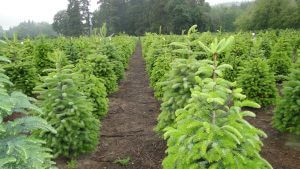
- The WA test plot in June 2018
-
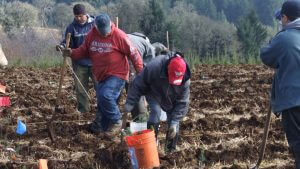
- Planting the Oregon CoFirGe site
-
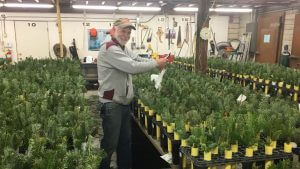
- Detached branch needle retention evaluations were done on all of the trees in the Nisqually CoFirGE plot
-
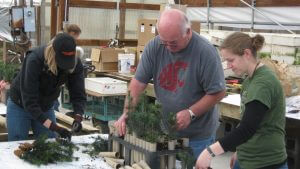
- Trial seedlings are sorted and tagged
-
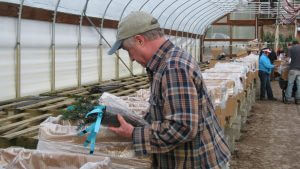
- Trial seedlings are packed for shipping to test plots
-
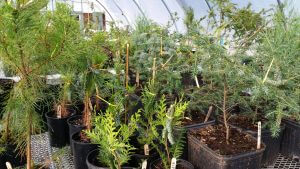
- Plants in the greenhouse when they were first infested with EHS. The infested shoots of Fraser fir are attached to each plant
-
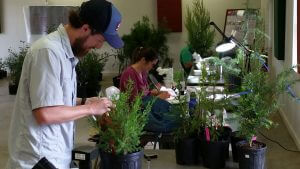
- Dr. Adam Dale and Paige Patterson, Watauga County extension agent, examine the plants for scale and study them under the microscope to determine if they are alive
-
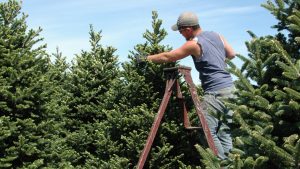
- Cone removal presents significant labor, time, and potential worker safety issues
-
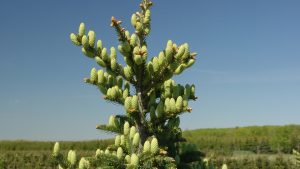
- Representation of the significant coverage of cones on untreated trees, as compared to treated trees
-
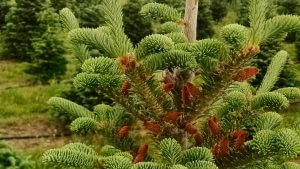
- Representation of the significant coverage of cones on untreated trees, as compared to treated trees